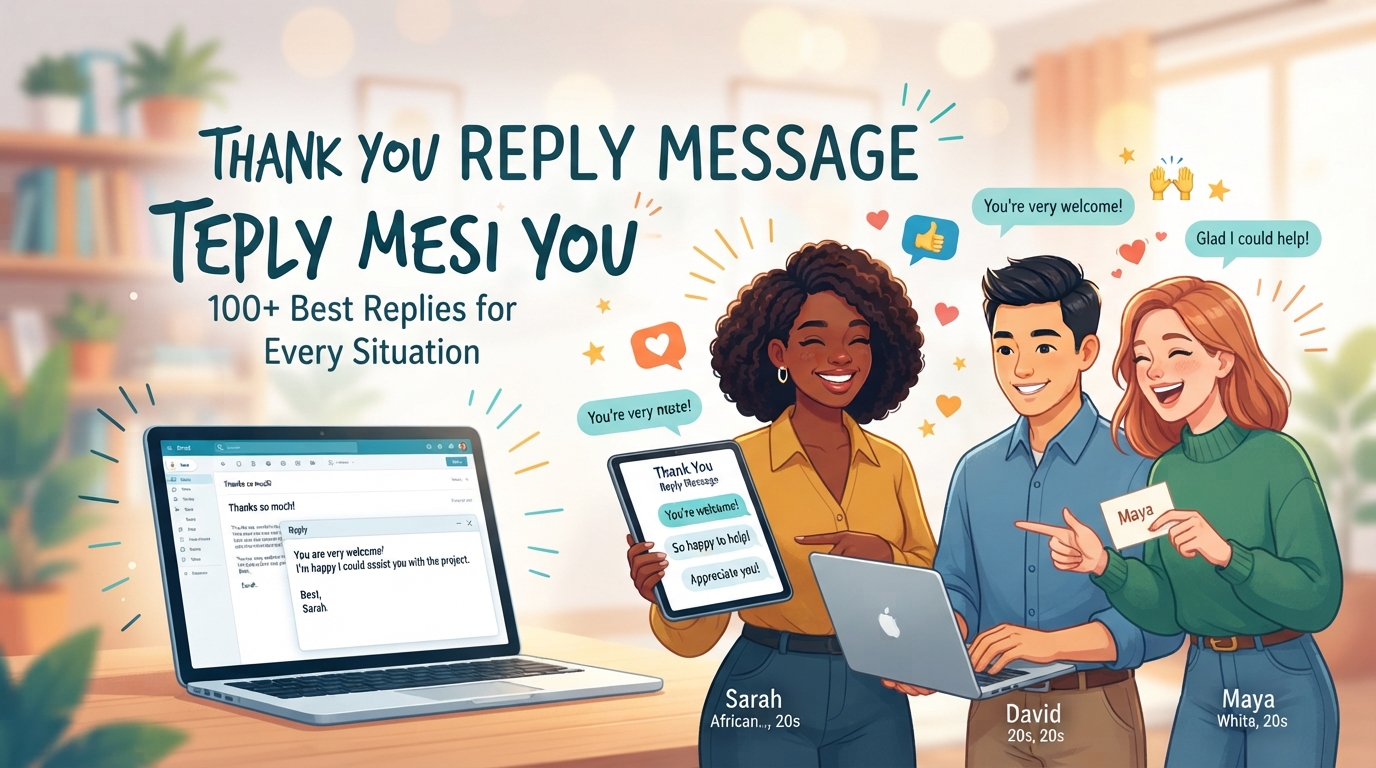
Thank You Reply Message: 100+ Best Replies for Every Situation
When someone says “thank you,” the best response depends on who they are, what they are thanking you for, and the tone of the conversation. A simple “You’re welcome” works almost anywhere, but sometimes you may want something warmer, more casual, professional, playful, or affectionate.

If you’re looking for a thank you reply message, start with the options below and choose the one that matches your relationship.
Quick Thank You Reply Messages
Here are versatile replies that work in most everyday conversations:
- You’re very welcome!
- My pleasure!
- Anytime!
- No problem at all.
- Of course!
- Happy to help.
- You got it!
- Glad I could help.
- Don’t mention it.
- It was nothing.
- Always happy to help.
- Absolutely!
- No worries!
- You’re most welcome.
- I’m glad I could help.
- It’s my pleasure.
- Anytime you need me.
- Of course, happy to help.
- Nothing to thank me for.
- I’m just glad it worked out.
The safest choice is “You’re welcome” when you are unsure. For a friend, “Anytime!” feels more natural. For professional communication, “My pleasure” or “You’re very welcome” usually sounds polished.
Best Thank You Reply Message by Situation
A good response doesn’t need to be complicated. The important thing is matching the wording to the situation.
When Someone Says “Thank You”
If someone simply says “Thank you,” you can keep your response equally simple:
- You’re welcome!
- Of course!
- Anytime!
- My pleasure.
- No problem!
- Happy to help.
- Glad I could help.
- Absolutely!
- Don’t worry about it.
- You’re most welcome.
For a close friend, “Anytime, you know that!” adds warmth without sounding overly formal.
When Someone Says “Thank You So Much”
When someone says “Thank you so much,” they may be emphasizing genuine appreciation. A slightly warmer response can match that feeling.
- You’re so welcome!
- Of course! I’m happy I could help.
- My pleasure, truly.
- Anytime! I’m glad I could be there.
- You don’t have to thank me.
- It was absolutely no trouble.
- I’m just happy it helped.
- Of course. I’m glad everything worked out.
- You’re very welcome. It meant a lot to help.
- Always happy to help when I can.
If the situation is casual, “Of course! Anytime 😊” is enough.
When Someone Says “Thanks a Lot”
“Thanks a lot” can be sincere, so a natural response is usually brief:
- You’re welcome!
- Anytime!
- No worries!
- Of course!
- Happy to help!
- My pleasure!
- You got it!
- Absolutely!
- Glad I could help.
If the person is thanking you for a meaningful favor, “Of course, I was happy to do it” feels more personal.
When Someone Thanks You for Coming
If someone says “Thanks for coming,” they may be appreciating your presence at an event, gathering, celebration, meeting, or personal occasion.
Try:
- Thanks for having me!
- I’m glad I could make it.
- It was lovely being there.
- I wouldn’t have missed it.
- I had a great time. Thank you for inviting me.
- It was my pleasure to be there.
- I’m happy I could be part of it.
- Thank you for having me. I really enjoyed myself.
- I’m glad I could celebrate with you.
- I really appreciate the invitation.
The best reply often acknowledges the invitation too: “Thanks for having me—I really enjoyed being there.”
Sweet Thank You Replies for Someone You Care About
Sometimes “you’re welcome” feels too formal when you’re talking to someone close.
Here are warmer options:
- Always, for you.
- You never have to thank me.
- I’ve got you.
- Anytime you need me.
- I’m always happy to be there for you.
- You know I’m here for you.
- It was nothing—I was happy to help.
- Seeing you happy is enough for me.
- Of course. I’d do it again.
- You mean a lot to me, so it was easy.
- Always happy to do something for you.
- You can count on me anytime.
These work particularly well in personal chats because they communicate care without turning a simple exchange into something overly dramatic.
Best Reply to Thank You From a Crush
If your crush says thank you, your response can be friendly and slightly warm without making the conversation awkward.
Casual and Safe
- Anytime 😊
- Of course!
- You’re welcome!
- No worries, happy to help.
- My pleasure 🙂
- Anytime you need me.
Slightly Flirty
- Anything for you 😉
- You’re welcome—you owe me a smile now.
- I’m glad I could make your day a little easier.
- For you? Anytime.
- You don’t have to thank me. Just keep smiling.
- Helping you is becoming my favorite thing.
- I’d happily do it again.
If You Want to Keep the Conversation Going
Instead of ending the chat with “You’re welcome,” add a question:
- Of course! So, how did everything go?
- Anytime! Did everything work out?
- You’re welcome 😊 What are you up to now?
- No worries! Did you enjoy it?
- My pleasure! How’s your day going?
This makes the response feel natural rather than forcing flirtation.
Professional Thank You Reply Messages
Professional communication usually benefits from clear, courteous wording. You don’t need to sound overly formal.
Simple Professional Replies
- You’re very welcome.
- My pleasure.
- Happy to assist.
- Glad I could help.
- It was my pleasure to assist.
- You’re most welcome.
- I’m glad I could be of assistance.
- Of course. Happy to help.
- Not at all. Please let me know if you need anything else.
- It was a pleasure working with you.
Reply to “Thank You for Your Service”
When someone says “Thank you for your service,” the appropriate response depends on the circumstances and your relationship with the person.
Simple responses include:
- You’re very welcome.
- Thank you for saying that.
- I appreciate your kind words.
- It means a lot to hear that.
- Thank you. I’m glad I could help.
- I appreciate that.
There is no requirement to give a lengthy response. A sincere acknowledgment is often enough.
How to Respond to a Thank You Text
A text message gives you more freedom than formal correspondence. Match the other person’s energy.
If they write:
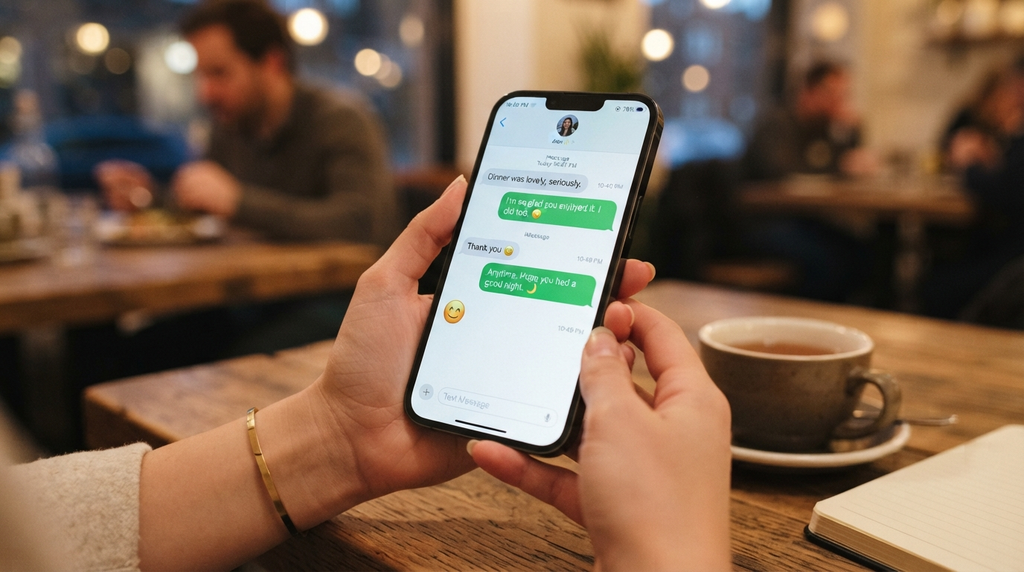
“Thank you!”
You can reply:
“You’re welcome! 😊”
If they write:
“Thank you so much for helping me today.”
You could say:
“Of course! I’m glad I could help.”
If they write:
“Thanks a lot! I really appreciate it.”
Try:
“Anytime! I’m happy I could help.”
If they write:
“Thank you for being there for me.”
A warmer response works better:
“Always. You know you can count on me.”
The key is not to overthink a simple conversation. A short response often feels more natural than a carefully constructed paragraph.
Thank You Response Messages for Friends
Friends usually don’t need formal language. These responses feel relaxed and genuine:
- Anytime, buddy!
- No worries!
- You got it!
- Always!
- I’ve got you.
- Don’t even mention it.
- Of course!
- No need to thank me.
- Happy to help, always.
- That’s what friends are for!
- You know I’ve got your back.
- Anytime you need a hand.
- Seriously, it was nothing.
- Glad I could help you out.
- No problem at all, my friend.
For close friends, an inside joke or a personal reference can be even better than a generic phrase.
Warm Replies to Appreciation
When someone specifically appreciates your effort, acknowledge the appreciation rather than dismissing it.
- Thank you, I really appreciate you saying that.
- That means a lot to me.
- I’m glad you noticed.
- I really appreciate your kind words.
- It was worth it knowing I could help.
- I’m happy it made a difference.
- Thank you—that’s very kind of you.
- I’m grateful you appreciated the effort.
- Your words mean a lot.
- I’m glad I could make things a little easier.
A response like “That means a lot to me” is especially useful when the person has gone beyond a routine “thanks.”
Funny Replies to Thank You
With friends or people who appreciate humor, you can make the response playful.
- You’re welcome. My invoice is in the mail.
- I accept payment in snacks.
- I’ll add it to my list of good deeds.
- No applause, please.
- Just doing my daily hero duties.
- You’re welcome. I’ll be here all week.
- Finally, my hard work has been recognized.
- I knew my talents would come in handy someday.
- Consider the favor officially completed.
- You’re welcome—where’s my trophy?
Use humorous replies only when the relationship supports that tone. A joke can feel inappropriate in a serious or professional situation.
Cute Replies to Thank You
For a partner, close friend, or affectionate conversation:
- Anything for you ❤️
- Always, with love.
- You’re welcome, you.
- No thanks needed.
- I’m just happy I could help.
- Always here for you.
- You make helping you easy.
- I’d do it again in a heartbeat.
- Your smile is thanks enough.
- You’re worth it.
- Of course, sweetheart.
- Always happy to make you happy.
Choose affectionate wording according to the relationship rather than using a romantic reply automatically.
Short Thank You Replies for Chat
Sometimes the best response is just one or two words:
- Anytime!
- Always!
- Of course!
- Absolutely!
- Definitely!
- My pleasure!
- No worries!
- No problem!
- You bet!
- You got it!
- Gladly!
- Certainly!
- Welcome!
- Anytime 😊
- Of course ❤️
Short replies are particularly useful when the conversation is already moving quickly.
Replies to “Thank You” Without Saying “You’re Welcome”
If you use “you’re welcome” too often, there are plenty of natural alternatives:
- My pleasure.
- Anytime.
- Happy to help.
- Of course.
- No worries.
- No problem.
- Glad I could help.
- Don’t mention it.
- It was nothing.
- I was happy to help.
- Absolutely.
- You got it.
- Always happy to help.
- I’m glad it worked out.
- It was my pleasure.
This gives you more flexibility while keeping the conversation natural.
How to Reply When Someone Thanks You for a Gift
If someone thanks you for a present, your response can focus on their enjoyment.
- I’m so glad you liked it!
- You’re very welcome. I thought you’d enjoy it.
- I’m happy you liked it!
- It was my pleasure.
- You deserve it!
- I’m just glad I could make you smile.
- I had a feeling it would suit you.
- I’m so happy you enjoyed it.
- You’re welcome! I picked it especially for you.
- Seeing you happy was the best part.
How to Reply to a Thank You Note
A thank-you note usually deserves a little more than a one-word answer, especially if the original message was thoughtful.
You could write:
It was truly my pleasure. Thank you for taking the time to write such a thoughtful note. I’m glad I could help, and I really appreciate your kind words.
Or keep it simpler:
You’re very welcome. I’m glad I could help, and your message was very kind.
For a professional relationship:
You’re very welcome. I appreciate your thoughtful message and was happy to assist.
Thank You Reply Messages for Work
Workplace replies should be friendly but appropriate for the relationship.
To a Coworker
- No problem—happy to help!
- Anytime! Glad we got it sorted.
- Of course. Let me know if you need anything else.
- You’re welcome! Happy to pitch in.
- No worries. We’re all here to help each other.
To a Manager
- You’re very welcome.
- My pleasure.
- Happy to help.
- Of course. I’m glad I could assist.
- Thank you—I appreciate that.
To a Client or Customer
- You’re very welcome. We’re glad we could assist.
- My pleasure. Please let us know if you need anything further.
- Happy to help. We appreciate your kind words.
- You’re most welcome. We’re pleased we could resolve the issue.
- It was our pleasure assisting you.

How to Choose the Right Thank You Response
The relationship matters more than finding a supposedly perfect phrase.
| Situation | Natural response |
|---|---|
| Casual acquaintance | “You’re welcome!” |
| Close friend | “Anytime!” |
| Family member | “Of course!” |
| Crush | “Anytime 😊” |
| Romantic partner | “Always, for you ❤️” |
| Coworker | “Happy to help!” |
| Client | “My pleasure.” |
| Manager | “You’re very welcome.” |
| Formal correspondence | “It was my pleasure.” |
| Someone deeply appreciative | “That means a lot to me.” |
| Funny conversation | “I accept payment in snacks.” |
The same words can feel different depending on the relationship. “Anytime” can sound warm with a friend but too casual in a formal business email. Likewise, “My pleasure” works beautifully professionally but may sound stiff in a casual group chat.
Common Mistakes When Replying to Thank You
Overexplaining
If someone simply says “Thanks,” there is usually no need for a long paragraph.
Instead of:
I really don’t think you need to thank me because I was only doing what anyone else would have done…
Simply say:
Anytime! Glad I could help.
Being Too Formal
“Your gratitude is duly acknowledged” may technically communicate the idea, but it sounds unnatural in ordinary conversation.
Use:
You’re very welcome!
Using Humor at the Wrong Time
A funny reply can work with a friend but may be inappropriate when someone is thanking you for emotional support, professional assistance, or a serious favor.
Dismissing Genuine Appreciation
There is a difference between being humble and making someone’s gratitude feel unimportant.
Instead of automatically saying “It was nothing,” consider:
I’m glad I could help. That means a lot.
Forcing a Conversation to Continue
Not every “thank you” needs another question. If the conversation has naturally ended, a simple response is perfectly fine.
What Is the Best Reply to Thank You?
There isn’t one universal best reply. “You’re welcome” is the safest all-purpose response, while “My pleasure,” “Anytime,” “Happy to help,” and “Of course” work better in specific contexts.
If you want to sound:
- Polite: You’re very welcome.
- Warm: I’m glad I could help.
- Casual: Anytime!
- Professional: My pleasure.
- Friendly: No worries!
- Affectionate: Always, for you.
- Supportive: You know I’m here for you.
- Playful: I accept payment in snacks.
The best thank you response is usually the one that sounds like something you would genuinely say.
More Helpful Reply Ideas
If you’re choosing a response for a specific conversation, the surrounding message matters. You may also want to explore related collections such as replies to compliments, ways to respond to congratulations, responses to “I miss you,” or messages for expressing appreciation.
These kinds of pages can help when a simple “thank you” isn’t the whole conversation and you need a response that fits the situation.
FAQ About Thank You Reply Messages
What is the best reply to “thank you”?
The safest answer is “You’re welcome!” Other natural choices include “My pleasure,” “Anytime,” “Of course,” and “Happy to help.” Choose based on how formal or personal the conversation is.
How do you respond to “thank you so much”?
You can say “You’re so welcome!”, “Of course! I’m glad I could help,” “Anytime!”, or “My pleasure.” A warmer response is appropriate when the person is expressing heartfelt appreciation.
How do you reply to a thank you text from a crush?
Keep it natural and avoid making the exchange unnecessarily intense. Try “Anytime 😊,” “Of course!,” “My pleasure,” or “Anything for you 😉” if you already have a playful relationship.
What is a good reply to “thanks a lot”?
“You’re welcome!”, “No worries!”, “Anytime!”, and “Happy to help!” are all natural responses.
How do you respond when someone appreciates you?
Acknowledge their words rather than immediately dismissing them. You can say “Thank you, that means a lot to me,” “I really appreciate you saying that,” or “I’m glad my effort helped.”
How do you reply to “thank you for your service”?
A simple, sincere response such as “Thank you for saying that” or “I appreciate your kind words” works well. You do not need to give a lengthy response unless you want to.
Is “no problem” a good response to thank you?
Yes. “No problem” is common and natural in casual conversation. In more formal settings, “You’re very welcome” or “My pleasure” may sound more polished.
Is “my pleasure” better than “you’re welcome”?
Neither is universally better. “You’re welcome” is broadly appropriate, while “My pleasure” emphasizes that you were happy to help and often works especially well in professional or courteous exchanges.
What should I say instead of “you’re welcome”?
Try “Anytime,” “My pleasure,” “Of course,” “Happy to help,” “No worries,” “Glad I could help,” or “Don’t mention it.” Pick one that matches the relationship and situation.
Final Takeaway
A good thank you reply message doesn’t need to be clever. The strongest response is one that fits the moment.
For most situations, use “You’re welcome,” “Of course,” “Anytime,” or “My pleasure.” For someone close to you, make it warmer. For work, keep it courteous and clear. For a crush, stay natural and let the relationship determine how playful you should be.
The goal isn’t to find one perfect response—it is to make the other person feel that their appreciation was heard.